Most businesses don’t need a grand AI strategy to get value from automation. They need to find the handful of tasks that quietly eat up hours every week, and hand those off first.
We know because we’ve done it ourselves. A lot of the work that keeps Greenlight Creative running used to be done by hand: paying vendors, chasing paperwork, getting new Mac City Morning Show episodes onto the website. None of it was hard. It was just constant, and every hour spent on it was an hour not spent on the creative work and the clients we actually care about.
Here’s what we’ve automated, what we learned along the way, and how you can find your own starting point.
How we use automation at Greenlight
Paying vendor invoices
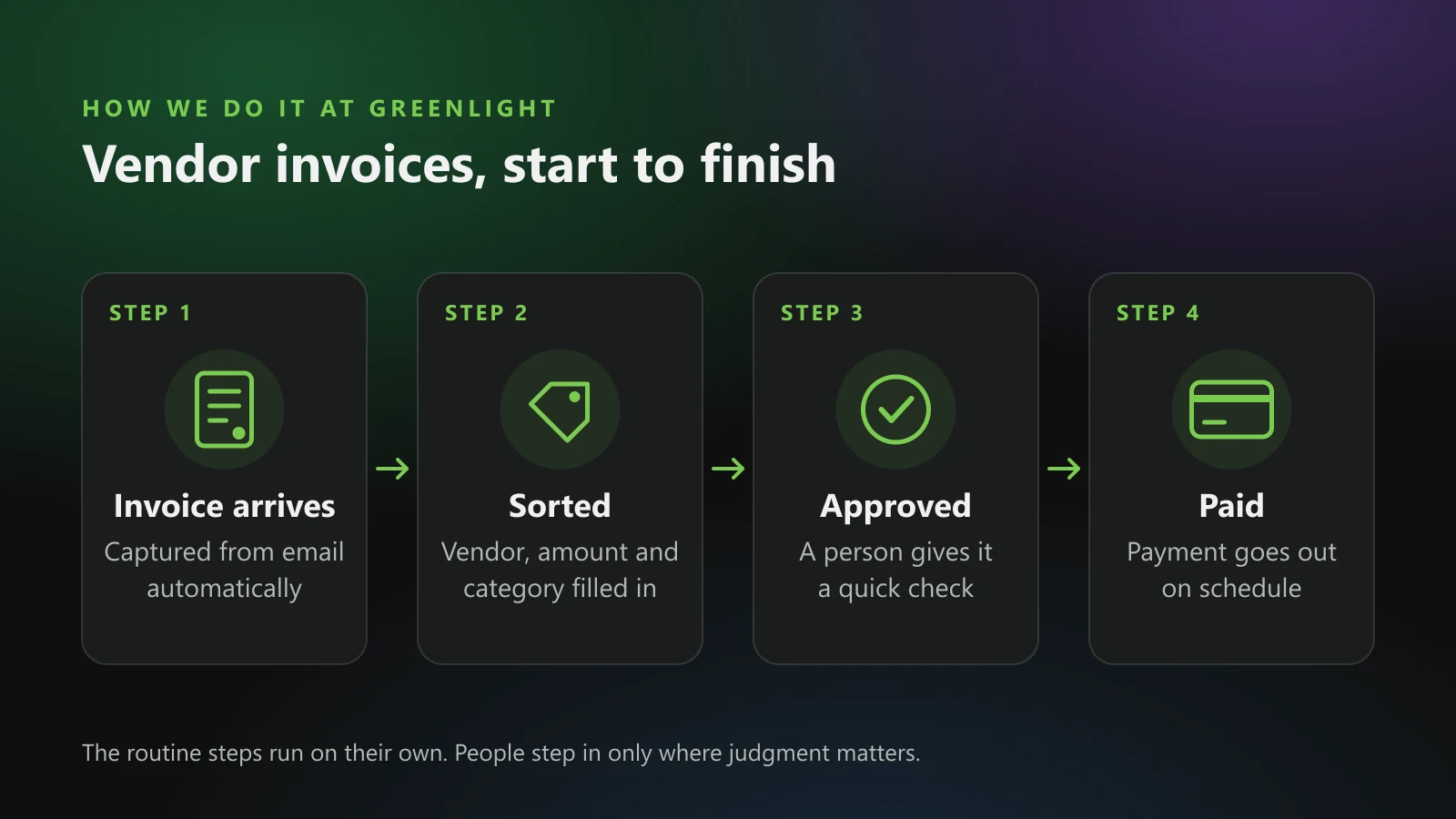
Invoices arrive from every direction, and each one used to mean the same routine: open the email, save the PDF, type the vendor and amount into our system, check it against what we expected, schedule the payment, then file everything away.
Now the routine steps run on their own. When an invoice comes in, it’s captured, the key details are filled in, and it’s queued up for payment. The part that still needs a person — a quick look to make sure the invoice is right — is the only part we touch. Nothing sits forgotten in an inbox, and vendors get paid on time.
Getting Mac City episodes onto the website
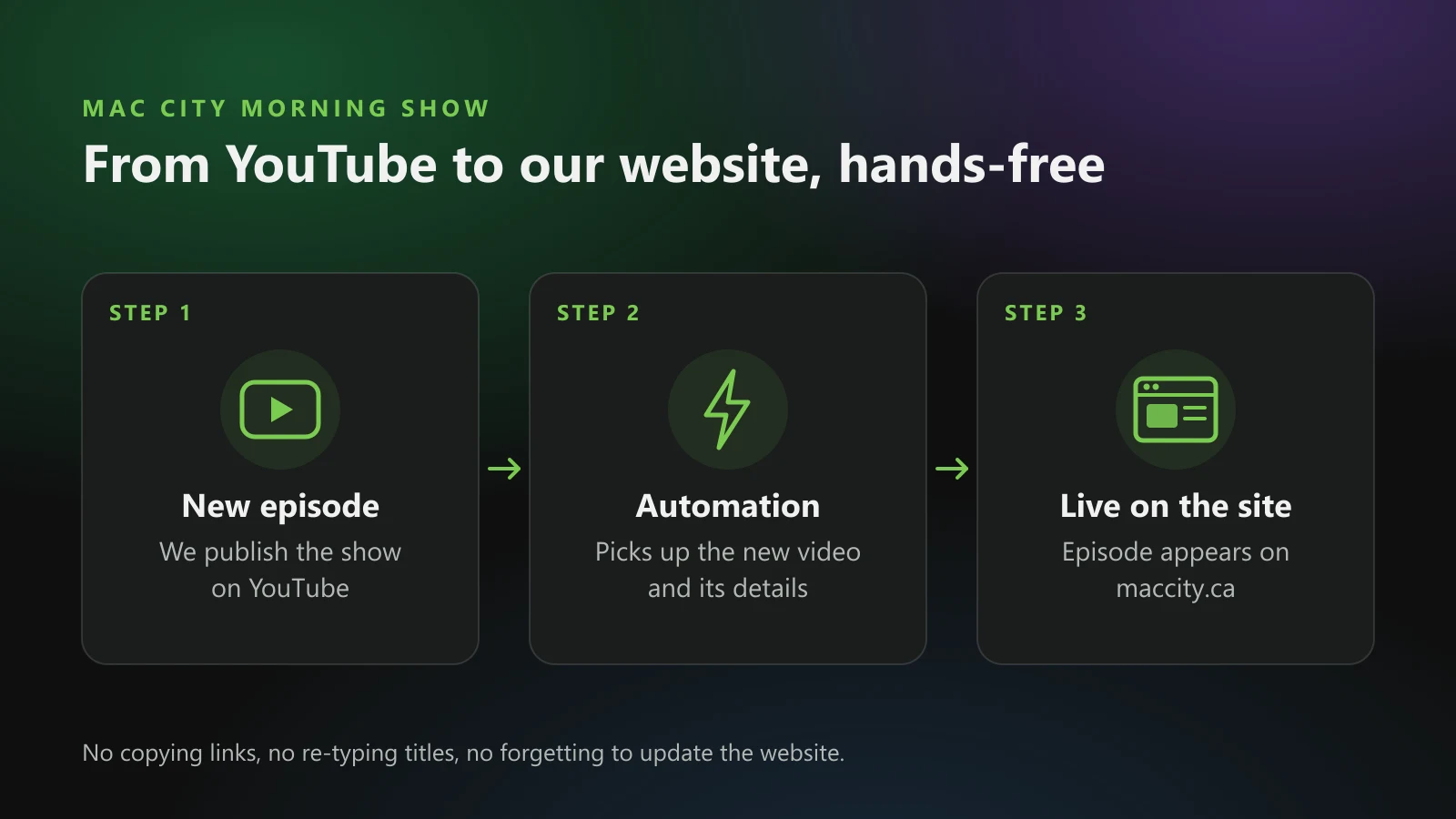
The Mac City Morning Show publishes regularly on YouTube, and every episode also belongs on the Mac City website. Doing that by hand meant copying the link, re-typing the title and description, publishing the page, and remembering to do it every single time.
Today, when a new episode goes live on YouTube, it shows up on the website automatically. No copying, no re-typing, and no episodes that quietly never made it onto the site because someone was busy that morning.
What these tasks have in common
None of these were glamorous projects, and that’s the point. They share a few traits that make them ideal candidates for automation:
- They happen often. Invoices and new episodes never stop coming.
- They follow clear rules. The steps are the same every time, so a system can follow them reliably.
- They cost something when they’re missed. A late payment or a missing episode all create problems that take longer to fix than they would have taken to prevent.
- Nobody enjoys doing them. Freeing people from tedious work is good for morale, not just for the calendar.
The payoff isn’t only the minutes saved on each task. It’s the mental load that disappears when you no longer have to remember to do them.
How to find your first automation
You don’t need to automate everything at once. Here’s the same simple process we’d walk any client through.
1. Write down the repetitive work
For one week, keep a running list of anything you or your team do more than a few times: copying details from an email into a spreadsheet, sending the same follow-up message, chasing invoices, moving files between tools, or posting the same content in more than one place.
2. Score each task
For each item, ask:
- How often does it happen? Daily tasks beat monthly ones.
- How predictable is it? Clear rules make automation reliable. Tasks that need judgment every time are better left with people.
- What happens when it’s missed? Slow lead follow-up or a late vendor payment costs more than a late internal report.
3. Start small and measure
Pick one high-scoring task, automate it, and check the results after a few weeks. Is it running reliably? Is anyone still doing it by hand out of habit? A small, dependable win builds confidence and shows you where to go next.
4. Keep a person in the loop
Automate the routine, but keep a human checkpoint wherever a mistake would be costly. In our invoice workflow, a person still gives each payment a quick check before it goes out. That one step keeps the whole process trustworthy.
Automation works best when it supports your team rather than replacing the human parts of your business that customers value.
Get your time back
Every task you automate is time returned to the work that matters: serving clients, creating, and growing the business. For us, that meant less time on paperwork and publishing and more time on the projects we love.
Curious what this could look like for your business? Let’s explore what’s possible.